
The Professional Camera Doesn't Look Like One Anymore
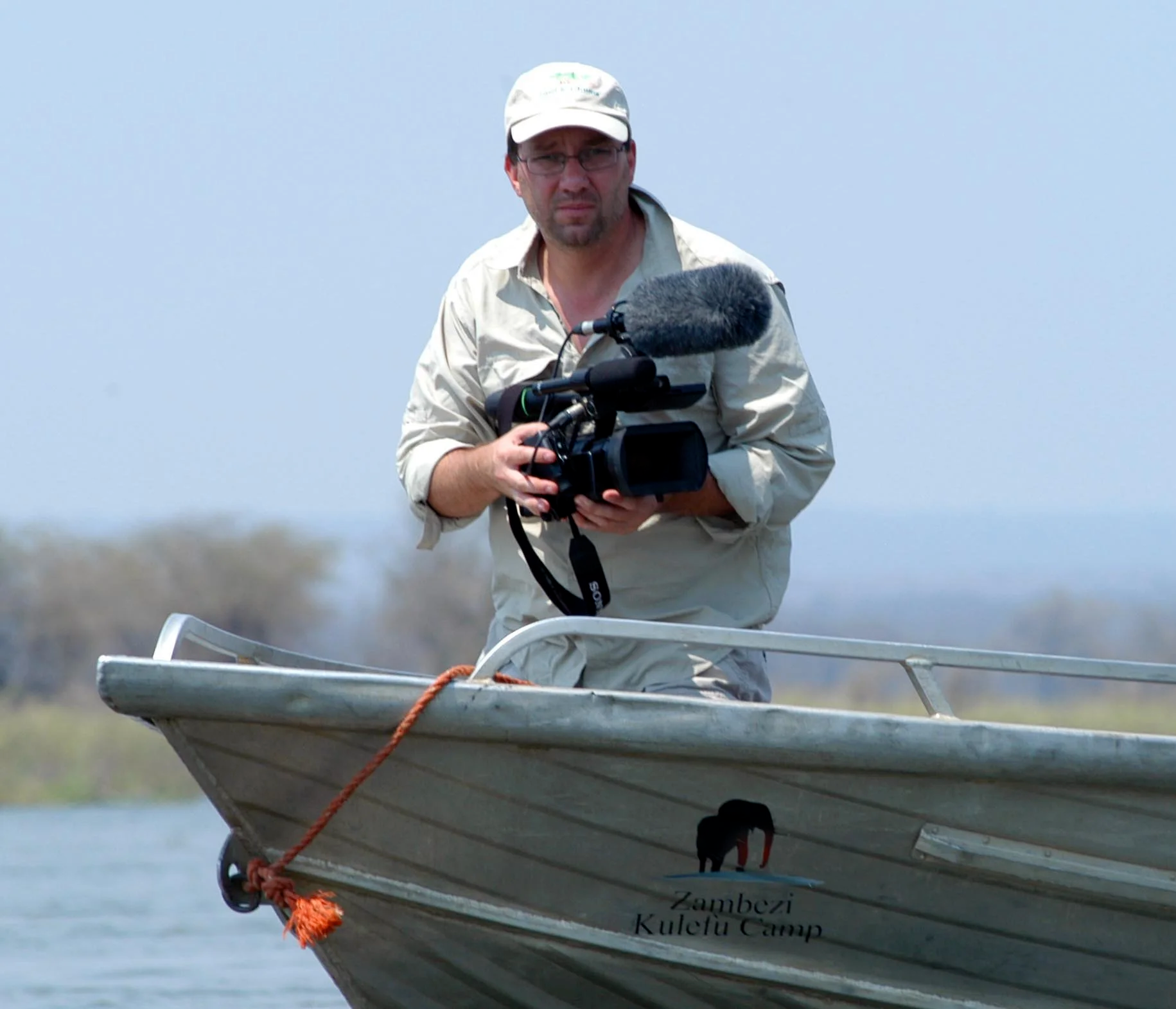
Filming in Africa
This photo was taken in 2009. I sure wish I had the technology then that I have today.
In 2010, I showed up for a high-end shoot with a still camera. At least, that's what it looked like to the client. They were expecting the big broadcast camera, the kind you see on a news crew's shoulder. Instead, I walked in holding what appeared to be the camera a wedding photographer would use. I could immediately see the worry on their faces. One person said, “Is that your camera!?” Just months earlier, the processing power of those cameras advanced so much, they now allowed the recording of video, and they gave us a look no other video camera could. I explained that scenes from major motion pictures had just been shot on these cameras. That helped a little. What helped more was the finished video. The footage had that soft, blurred background you see in films. They loved it.
I've been shooting professionally since 1991, and I think we're at the start of another shift just like that one. Once again, the professional camera is about to stop looking like a professional camera.
From my shoulder to my palm
It helps to see how far this has already come.
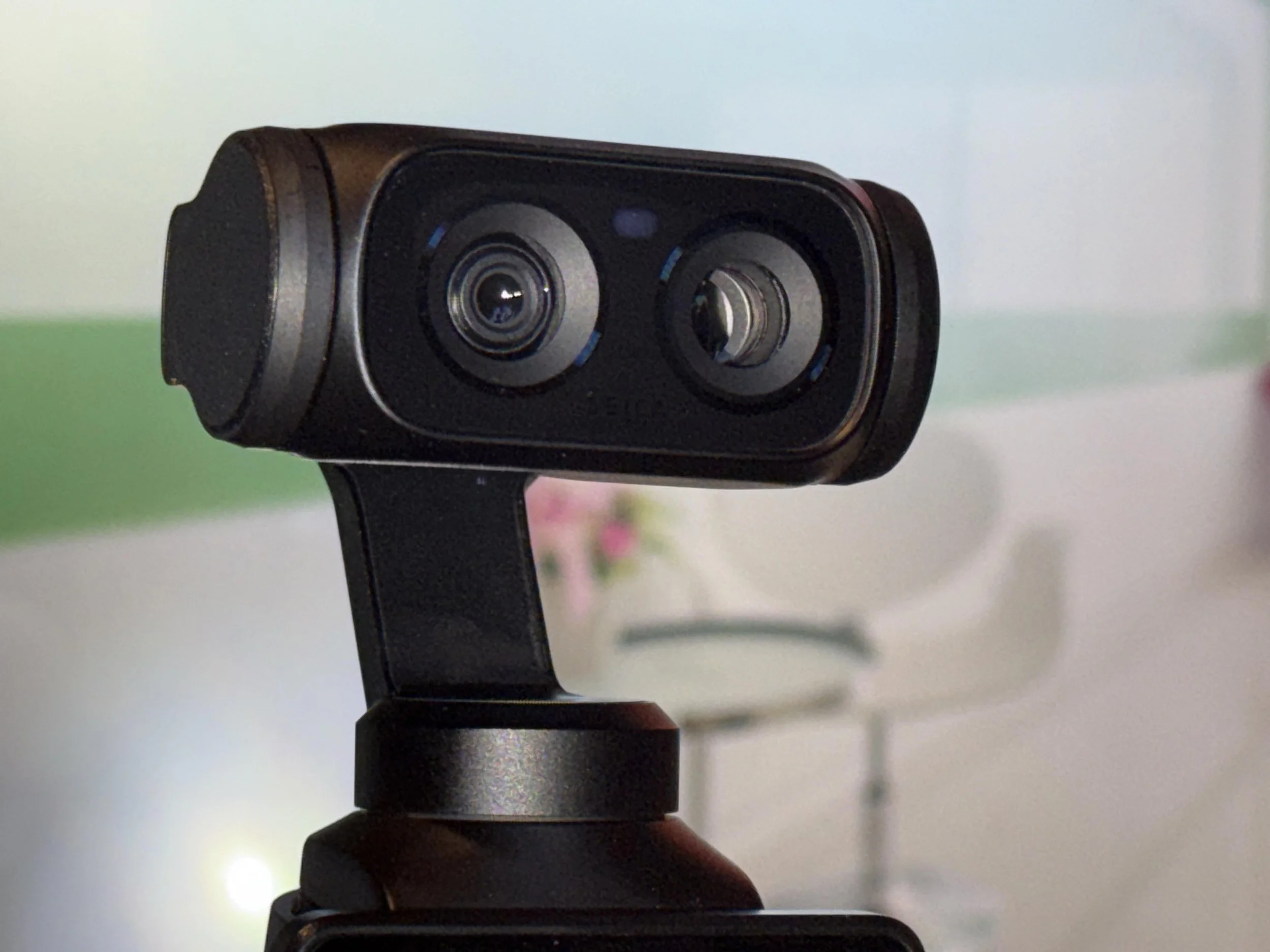
Today’s Camera
Still very professional, yet fits in the palm of my hand.
When I started, cameras sat on your shoulder because they had to. They were big and heavy, and your body was the stabilizer. Later came smaller cameras you braced against your chest. Then the still-camera era I mentioned above.
The newest camera in my kit fits in the palm of my hand. It has a tiny motorized head that keeps the shot steady no matter how I move, the kind of stabilizing that used to require a separate piece of equipment and a lot of practice. Here is a picture of it. That little thing is a professional camera.
The camera swallowed the support gear
Here's what makes this shift different from the last one.
In 2010, the new cameras changed the image, but I still needed everything else. The tripod, the stabilizer rig, all the support gear still came along in cases.
These new small cameras absorbed most of that. The stabilizer is built in, so smooth walking shots need no extra equipment. Low light used to be the automatic weakness of small cameras, and that problem is mostly gone too. I recently did some night filming for Summerfest, and the results are outstanding.
My favorite trick: I mount it on a ten-foot pole and suddenly I have a jib arm, one of those sweeping crane shots that used to require a heavy kit and twenty minutes of setup. Now it's a camera the size of a microphone on the end of a painter's pole. The shot looks the same to the viewer, but the setup time and the sore back are gone.
Specialty cameras grew up
Tiny cameras aren't new. We've had them for years, strapped to helmets and mounted inside race cars. But those were one-trick cameras. The image quality couldn't keep up with the main camera, so I would only use it with the right conditions. The footage from these new small cameras holds up next to my main camera. The specialty camera turned into an everyday camera, and that opens up angles and placements that simply weren't practical before.
The room stays natural
This is my favorite part, and it has nothing to do with specs: A big camera changes the mood of every room it enters. I've watched it happen for over thirty years. Bring a shoulder rig into a school and the kids either perform for it or hide from it. Walk a big camera through an office for a marketing video and employees stiffen up.
A camera the size of a microphone gets ignored. Within a few minutes, people forget it's there and go back to being themselves. When I'm shooting in a school, the kids stay kids. In a workplace, people keep working like nobody's filming, because as far as their brains are concerned, nobody is.
Relaxed, natural people make for better footage. The small camera isn't just easier for me to carry, it captures moments the big camera scares away. That's a quality upgrade for you, the client, not just a convenience for the guy holding it.
It's not the only camera I bring
Before anyone thinks I've traded in all my gear for something pocket-sized, it still has it’s limits.
Interviews still get the real camera. When someone sits down to talk, I want full control of focus, that beautiful soft background, and professional audio, and those are still jobs for a larger camera and a locked-down tripod. The same goes for any high-stakes shoot where there's no second chance. I wrote recently about knowing when a video is worth bringing in a pro, and none of that changes because a great small camera exists.
Think of it this way. The small camera earned a permanent spot in my kit - it didn't take over my kit.
The picture wins the argument
Every fifteen years or so, this industry argues about what a real camera looks like. Film people doubted video. Broadcast shooters rolled their eyes at those little still cameras, right up until the footage came back. Now some of my colleagues chuckle at a camera that looks like it belongs on a selfie stick - until they see the footage.
So if your videographer shows up someday holding something that looks like it came from the electronics aisle, wait before you worry. In 2010, the answer to "is that a real camera?" was the finished video. It still is.